
The scaling mindset
You are still the system. That's the plateau.
Read articleOwners tend to have the same handful of questions before bringing in a fractional CFO. Here’s how Alan answers them. If something’s still unclear, just reach out and ask.
It’s quicker than bringing on a full-time hire, since there’s no long ramp-up to sit through. The first conversation covers what’s pressing for you right now, and from there Alan starts with the numbers you already have, like recent statements and last year’s return, rather than asking for a stack of new paperwork first. Within the first few weeks he’ll point to where his attention makes the biggest difference, and if a filing deadline or a financing decision is driving the timing, that’s what gets handled first. You can also look over how the engagement levels are structured before committing to anything.
Changing scope is expected, not a problem. The agreement is written in plain terms and gets revisited regularly, so when the work needs to grow during a busy season or a major decision, it grows, and when things settle it eases back. There’s no penalty for dialing it up or down, and if you need to pause for a while, that’s a conversation, not a battle over contract language. The whole point is for the arrangement to track where your business actually is, not lock you into where it was six months ago.
Nobody gets displaced. Your bookkeeper keeps recording the day-to-day and closing out the month, while your tax preparer still handles the returns each year. Where Alan fits is the forward-looking side: tax planning that happens well before filing season, a cash flow picture you can see coming, and a regular look at what the numbers actually mean for the calls you’re weighing, whether that’s pricing, a new hire, or a major purchase. Since he’s a CPA himself, he can also dig into the tax-strategy questions a busy preparer often can’t get to, and everyone’s lane is spelled out up front so you’re not paying twice for the same work or left wondering who owns what.
The real difference is a document versus a standing relationship. A project ends with a set of recommendations and a handoff, and the rest is up to you. What Alan offers instead is an ongoing seat in the business, where he watches how the plan actually plays out and adjusts as real life pushes on it. So when something comes up between meetings, a new hire, a price change, a surprise tax question, you’ve got someone who already knows the situation and can weigh in fast, not a report you have to re-explain to a stranger.
Most of the owners Alan works with are running somewhere between one and ten million in revenue. That tends to be the stage where the financial questions have gotten too important to guess at, but bringing on a full-time CFO would still be more than the business needs. And if your revenue lands a bit below or above that, reach out anyway and Alan will give you an honest take on whether it makes sense.
Quite a range. Across a 40 year career and around 4,000 clients, Alan has worked most closely with service businesses, real estate investors and developers, and professional practices, from dental and medical offices to engineering firms. Knowing an industry’s quirks helps, but the way an owner-run business handles tax and cash carries over from one field to the next, so if yours is something different, you’re still in good hands.
Not at all. If what you have is a specific, one-time job, that’s a perfectly good place to start, with no expectation it turns into a standing arrangement. Some owners bring Alan in for a focused stretch around one decision and wrap up when it’s handled, while others find partway through that a longer relationship would help and shift into one, and a quick call is the easiest way to land on the scope that actually fits.
It happens more than you’d think, and it tends to work well. A lot of Alan’s engagements sit next to an existing CFO rather than in place of one. Maybe that CFO is focused on operations and would welcome a tax-first partner on the planning and cash decisions, maybe the role is part-time and short on hours, or maybe you just want a seasoned second opinion before a major move. Either way, the two roles get mapped out up front, so the added depth is genuinely helpful and nobody feels stepped on.
There’s no single sticker price, because the cost follows how deep the engagement runs. A business that just needs a steady monthly rhythm pays differently than one leaning on Alan for heavier planning and more frequent decisions. Nothing here is priced like a full-time hire on payroll, though; it’s scaled to an owner-run business, and you can look over how the engagement levels are set up and settle the fit on a discovery call.
It’s a fair thing to ask, and the truthful answer starts with where your business is today. What tends to change first, often once the first couple of monthly reviews are in, is that you stop reacting to the numbers after the fact: you get a forward view of cash, and a tax strategy that’s managed across the whole year instead of patched together each spring. For a tax-first advisor like Alan, much of the value is the tax you plan around ahead of time and the decisions you no longer make on a hunch. He won’t hang a specific dollar figure or percentage on it before he’s seen your situation, since a number he can’t stand behind is worthless to you, but he’ll give you a straight sense of what’s realistic once he has.
You could, and for a single, well-defined problem a consultant might be the cheaper call. The gap shows up over time: a consultant’s fee buys you a deliverable, while a fractional arrangement buys ongoing judgment from someone who’s stayed current on your business the whole way through. When you weigh the value across a full year of decisions instead of one report, the standing relationship is usually where the money goes further.
Yes, and adjusting is simple by design. If you need more of Alan’s time during a stretch, you scale up; when things are steady and you need less, you scale back, so what you’re paying for always matches what the business actually calls for. Those conversations about what’s working happen as a normal part of the engagement, which means you’re never stuck at a level of support that stopped making sense.
Not sure how a fractional CFO engagement actually unfolds? The full walkthrough takes you from that first conversation through the day-to-day working relationship, one clear step at a time, without a drawn-out setup slowing things down.
How It Works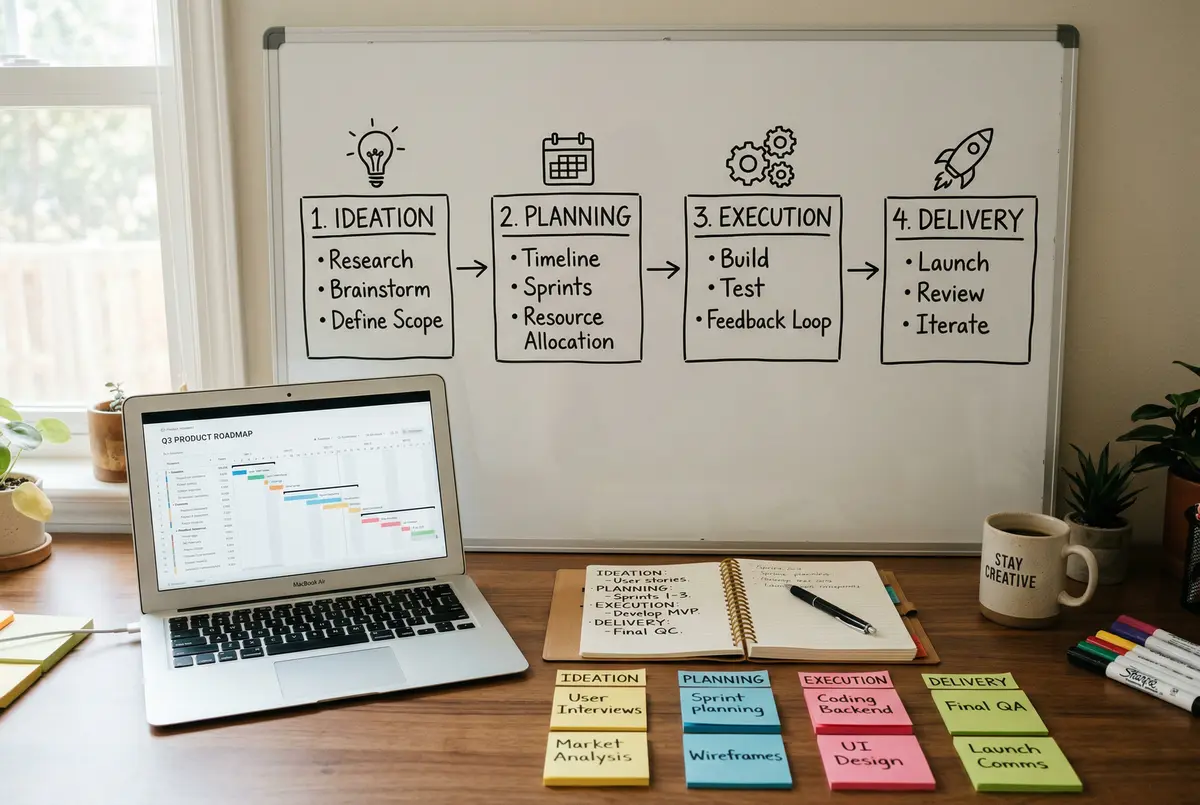
Financial insights and strategies delivered to your inbox. Subscribe to stay informed.
You are still the system. That's the plateau.
Read article
Three questions every owner should be able to answer.
Read article
The team isn't underperforming. It's under-structured.
Read article
Late receivables don't hit the P&L. DSO is the missing KPI.
Read article